HTTP
HTTP = Hypertext Transfer Protocol
HTTP is a protocol based on TCP/IP. It is stateless, which means every request needs to carry the information needed to fulfil it. This information is carried in the header.
In HTTP, all the requests and responses (including headers) are human-readable.
HTTP/1.1 vs HTTP/2.0
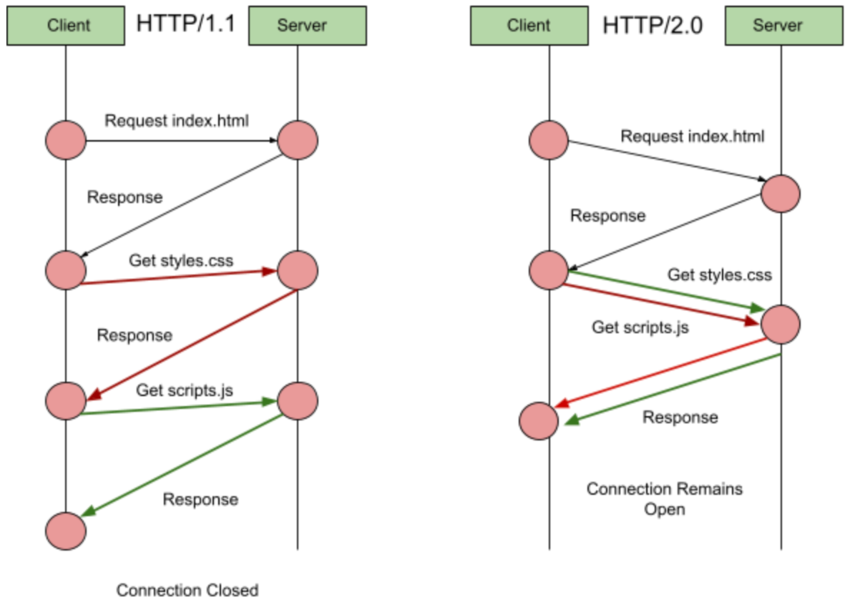
HTTP/2.0 supports multiplexing. This means that multiple requests can be sent at once:
HTTP URLs
https://www.domain.com:1234/path/to/resource?a=b&x=y
- https specifies the protocol. It can be http or https, which makes the communication secure.
- www.domain.com is the host.
- 1234 is the port. In many cases, the browser hides the port. The default is 80.
- path/to/resource is the resource path. It helps the server identify a specific resource and generate the right response.
- ?a=b&x=y are query string parameters. Query string parameters are used by the server to spot the right resource.
HTTP Request
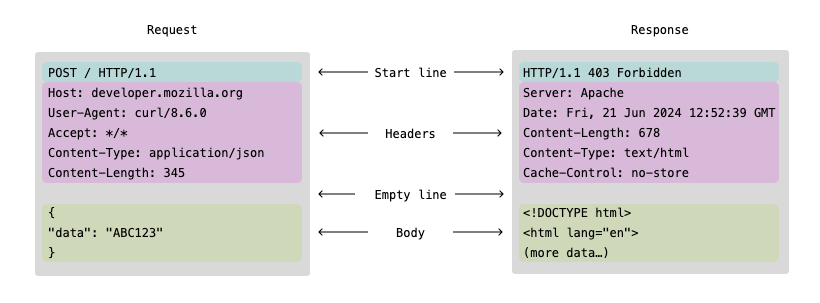
Structure
HTTP Request Verbs
- GET: Fetch a resource, all pieces of information shopuld be delivered over the URL
- POST: Create an object. Payload is optional
- PUT: Update/Raplace existing resource, payload is optional
- DELETE: Deletes a resource
PUT and DELETE are in theory also just POST requests
HTTP Status Codes
Look here.